Why “Micro-Experiences” Are the Future of Bay Area Advertising
If you’re running a business in the San Francisco Bay Area in 2026, you already know the struggle. Digital advertising is louder, more expensive, and more crowded than ever. Between the constant scroll of social media and the AI-generated noise filling up every inbox, your potential customers are developing a high-tech immunity to standard marketing.
But the reality is, people aren't ignoring advertising: they’re ignoring interruptions.
The next thing you’ll need to do to cut through that noise is to stop thinking about "reach" and start thinking about "micro-experiences." This shift in perspective is exactly why local, physical marketing: the kind we’ve been perfecting at Thumbtack Bugle since 1976: is seeing a massive resurgence.
What Exactly is a Marketing Micro-Experience?
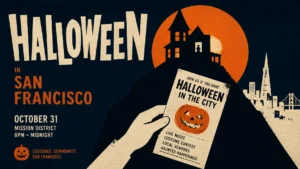
Think about your own day. You’re walking down Piedmont Avenue in Oakland or grabbing a coffee in the Mission. You aren't looking for an ad. But then, you spot a vibrant, well-designed flyer for a local concert pinned to a community board. You pause. You look at the art. You might even snap a photo of the QR code.
That 15-second interaction is a micro-experience.
Unlike a digital ad that flashes across your screen for 1.2 seconds before being swiped away, a micro-experience is:
Tactile and Real: It exists in the physical world, which our brains are hard-wired to trust more than pixels.
Hyper-Localized: It’s in your neighborhood, at your favorite spot, making it immediately relevant.
Non-Intrusive: It invites engagement rather than demanding it.
Ideally, your marketing should feel like a discovery, not a chore. When a customer finds your message in their natural environment, the barrier of skepticism drops.
The Digital Fatigue Factor
Are you tired of seeing "sponsored" posts that have nothing to do with your actual life? Your customers are too. In 2026, the cost of customer acquisition on platforms like Meta and Google has reached a breaking point for many small businesses and startups.
The "science" of modern marketing shows that as digital spaces become more saturated, the value of offline touchpoints increases. According to recent trends in Bay Area advertising, consumers are rewarding brands that feel authentic and human. They want to know you’re actually here in the community with them.
Physical posters and flyers provide a "local advantage" that an algorithm simply cannot replicate. When someone sees your brand on a bulletin board at their local gym or a window in a high-traffic neighborhood, they subconsciously associate you with the community they already trust.
Why Physical Media Wins the "Attention Economy"
The biggest challenge for any business today is the shrinking attention span. But here’s the interesting part: while digital attention spans are dropping, our engagement with the physical world remains relatively stable.
When you place a poster in a storefront window or distribute postcards in a specific neighborhood, you are occupying a physical space that someone passes every single day. This is the "Rule of Seven" in action: the marketing principle that a prospect needs to see your message at least seven times before they take action.
A digital ad disappears once the budget runs out. A well-placed poster stays up, working for you 24/7, building familiarity and trust with every passerby.
The Thumbtack Bugle Approach to Visibility
At Thumbtack Bugle, we don't just "put up flyers." We plan strategic routes through San Francisco, Oakland, Berkeley, San Jose, and beyond. We know which boards get the most eyes and which shops have the most foot traffic.
Our services include:
Postering: Reaching high-visibility community hubs.
Flyer Handouts: Direct, human-to-human interaction via street teams.
Local Mailings: Getting your message directly into the hands of neighbors.
Brand Ambassadors: Real people representing your brand in the wild.
The Bay Area isn't one giant market; it’s a collection of distinct micro-communities. A campaign that works in the tech-heavy corridors of Palo Alto might need a completely different visual language for the arts-focused neighborhoods of Oakland.
Do you know where your target audience spends their "offline" time?
The Commuters: Transit hubs and parking garages in downtown SF.
The Families: Community centers and parks in San Mateo or San Rafael.
The Creatives: Independent cafes and record stores in Berkeley.
By identifying these micro-hubs, you can create a distribution strategy that ensures your flyers and posters are seen by the right people at the right moment.
Bridging the Gap: Physical Marketing Meets Digital Results
One of the most common questions we get is, "How do I track the results of a flyer campaign?"
In 2026, the line between physical and digital is thinner than ever. To turn a micro-experience into a conversion, you need a clear bridge. The most effective way to do this is through Integrated Tracking.
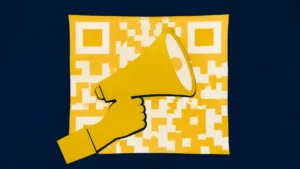
QR Codes: Not just any QR code: use a unique URL (UTM) for each neighborhood or route. This tells you exactly which locations are driving the most traffic.
Unique Promo Codes: Offer a "neighbor-only" discount that is only available on your physical flyers.
Visual Social Proof: Encourage people to take a photo of your poster and tag you on social media for a small reward.
This creates a loop. The physical poster creates the initial "micro-experience," and the digital integration makes it easy for the customer to take the next step. Clients have told us this approach is often "simpler than META and cheaper," with some seeing results like 8 new students from a single campaign.
Avoiding Common Pitfalls
Even the best micro-experience can fail if the execution is sloppy. We've seen it all since 1976, and there are a few mistakes you should avoid at all costs:
Cluttered Design: You have about 3 seconds to catch someone's eye. If your flyer is a wall of text, people will walk right past it. Use bold colors (like our signature navy and yellow) and a single, clear call to action.
Poor Placement: Putting a flyer for a high-end tech conference in a playground isn't just a waste of money: it's off-brand.
Lack of Consistency: One flyer isn't a campaign. You need a consistent presence over several weeks to build the neighborhood "fandom" that leads to long-term success.
Sometimes, the best way to create a micro-experience is to be a little bit different. Guerrilla marketing: or "mischief" marketing: is about creating a moment of delightful surprise.
Imagine a street team handing out high-quality samples or postcards in a way that feels helpful, not pushy. Or a series of posters that tell a story over three blocks. These are the interactions people remember. They are the stories they tell their friends. And in a world of automated bots, that human touch is your greatest competitive advantage.
Ready to Start Your Local Campaign?
The future of Bay Area advertising isn't just digital; it's a hybrid of high-tech targeting and high-touch physical presence. Whether you’re a startup looking for your first 100 users or a nonprofit trying to fill seats for an event, we have the local knowledge to get you noticed.
Don't let your brand get lost in the digital void. Let’s create some real-world micro-experiences that drive real-world results.
Thumbtack Bugle The SF Bay Area's Original Lifestyle Marketing Agency (Since 1976) Phone: 415-685-9477 Address: 3871 Piedmont Avenue #323, Oakland, CA 94611 Web: www.thumbtackbugle.com