In a city where every bus stop is a tech ad and every local is bombarded by thousands of digital impressions daily, the "noise" is deafening. You might be tempted to dump your entire marketing budget into Meta or Google ads because it’s scalable and easy to track. But the reality is, digital costs in the Bay Area are skyrocketing, and your target audience has become remarkably good at scrolling right past you.
This brings us to a question every SF founder eventually asks: Do you really need brand ambassadors? Is it worth hiring real human beings to walk the streets of the Mission or SoMa to talk about your app?
Ideally, your marketing should feel less like an intrusion and more like a conversation. That’s where brand ambassadors come in. Let’s look at the science and the local reality of why a human face might be the most "disruptive" thing you can do for your startup's growth.
The Digital Ad Fatigue in the Bay Area
If you've run a localized campaign on social media recently, you know the pain. You are competing for the same 7×7 square miles of attention as every unicorn and Fortune 500 company in the world. This drives your CPM (cost per thousand impressions) through the roof.
But cost isn't the only issue; it's trust. San Franciscans are famously skeptical of "sponsored" content. When a local sees an ad for a new food delivery app or a fintech tool while scrolling through their feed, their brain treats it as a chore.
Compare that to a face-to-face interaction. When a well-trained ambassador explains your value proposition outside a BART station or at a local festival, they aren't just an ad: they are a recommendation. Research shows that personal recommendations are still the most powerful driver of purchasing decisions. For a startup, that early trust is the difference between a high churn rate and a loyal user base.
What Exactly Is a Brand Ambassador for a Startup?
Before you hire a group of people to stand on a corner, you need to understand what you’re actually buying. A brand ambassador isn't just a "temp worker" with a flyer. They are the physical embodiment of your brand.
For an SF startup, an ambassador typically performs several key roles:
Educator: They explain complex features that a 15-second video can’t.
Lead Generator: They capture emails or facilitate app downloads on the spot.
Vibe Setter: They represent the culture of your company in high-traffic areas like Union Square or the Embarcadero.
Feedback Loop: They hear the immediate objections locals have about your product, providing you with real-world data you’ll never get from a dashboard.
The ROI Reality Check: Real People vs. Algorithms
You might think that hiring humans is "unscalable." However, for many of our clients at Thumbtack Bugle, the effective cost per engaged prospect is often lower than digital ads.
Think about it this way: When someone clicks a digital ad, they might stay on your landing page for three seconds. When someone talks to a brand ambassador, they might engage for two minutes. That deep engagement leads to higher-quality users who actually understand what you do.
Additionally, brand ambassadors can be paired with physical marketing materials like flyers and postcards to create a multi-sensory experience. A person hands you a flyer, explains the benefit, and suddenly that piece of paper in your pocket has a story attached to it.
Strategy for SF Neighborhoods: Where to Deploy
San Francisco isn't one giant market; it’s a collection of distinct villages. Your strategy needs to reflect that. If you’re a B2B SaaS startup, your ambassadors belong in the Financial District or near the convention centers during a major conference. If you’re a consumer app focused on nightlife, you need to be in the Mission or the Marina on a Friday night.
We often recommend a "surround sound" approach:
Identify your "hot zones" based on where your target audience lives and works.
Send in the street team to capitalize on that familiarity and have the actual conversations.
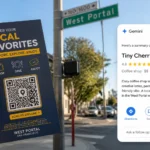
This methodology works because it mimics how humans process information. First, they see the name (the poster), then they hear the story (the ambassador), then they take action (the flyer/app download).
Avoiding Common Mistakes
The most common pitfall for startups is treating ambassadors like an afterthought. If you hire unmotivated people and give them zero training, you are better off burning your money.
To ensure success, follow these "science-based" rules of engagement:
The 3-Second Pitch: Your ambassadors must be able to explain what your startup does in three seconds or less. If they can’t hook someone in that window, they’ve lost them.
Quality over Quantity: It is better to have two amazing ambassadors who truly understand your mission than ten people who are looking at their phones.
Integrated Tracking: Use unique QR codes or promo codes for each ambassador. This allows you to track exactly who is driving the most sign-ups and optimize your spend in real-time.
Are you prepared to manage the logistics of hiring, training, and supervising a street team yourself? Most founders aren't. That’s why many choose to partner with a local agency that has been navigating these streets since 1976.
The Verdict: Do You Need Them?
The truth is, if you are a purely global digital product with no specific local tie, you might not. But if you are trying to build a brand that is a visible part of the San Francisco community: if you want to own your backyard: then brand ambassadors are not a luxury; they are a necessity.
In a world of bots and "ghost" followers, a real person standing on a sidewalk is the most honest marketing you can do. It’s simpler than Meta, and when done right, it yields the kind of "8 new students from one campaign" results that digital ads struggle to match.
The next thing you’ll need to do is decide how to integrate this with your current physical outreach. Whether you need street teams, flyer handouts, or local mailings, we’re here to help you navigate the Bay Area.
Ready to take your startup to the streets? Contact Thumbtack Bugle today to plan your local outreach. Phone: 415-685-9477 Address: 3871 Piedmont Avenue #323, Oakland, CA 94611 Website:www.thumbtackbugle.com