Small Business Saturday Survival Kit: How SF Shops Can Own the Biggest Local Shopping Day of the Year
Small Business Saturday is on Saturday, November 28, 2026. If you run a shop in San Francisco, you have a timely reason to bring nearby customers through your door, and help them discover other independent businesses on your block.
But the date alone won’t fill your store. People need a clear reason to visit, an easy way to find you, and a reminder at the right time. Physical flyers and a well-trained street team can help connect those pieces.
Here’s a practical plan you can put to work now.
Start with one clear offer
Before you print anything, decide what you want a customer to do. “Shop local” is a worthwhile message, but it may not be enough to move someone from walking by to walking in.
Choose one simple offer or activity that fits your business, such as:
A small gift with purchase
A limited-time bundle
A demonstration or tasting
A holiday shopping guide featuring nearby stores
A neighborhood “passport” customers can get stamped at participating shops
Keep the offer easy to understand and easy for staff to explain. Make sure it works for your margins and that you can honor it throughout the advertised hours.
A flyer has limited space. Don’t try to fit your whole business story onto it. Give it a single job: get the right local person to take one next step.
For a Small Business Saturday handout, put these details where they’re easy to spot:
The date: Saturday, November 28
The offer or event: Say exactly what someone gets or can do
Your address and hours
A short URL or QR code leading to event details
A clear invitation: “Visit us,” “Bring this flyer,” or “Explore the neighborhood”
Use a headline people can understand at a glance. Keep the design readable, especially when someone is standing on a busy sidewalk. A bold color, one strong image, and generous space can do more than a crowded page full of small text.
If you’re coordinating with nearby merchants, agree on a shared event name, date, and neighborhood message. Each shop can still include its own offer. The key is to make the materials feel connected, so shoppers see a local event rather than a pile of unrelated promotions.
Make a neighborhood route, not a one-store campaign
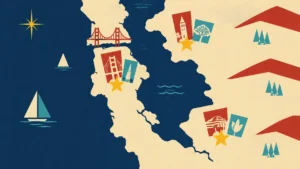
The strongest local business advertising often helps people discover more than one place. Ask a few nearby businesses if they’ll take part in a shared route or shopping guide. A bookshop, café, gift store, and market can give shoppers several reasons to make a trip, and give each other a reason to share the event.
Create a simple printed map or list that shows:
Participating businesses and their addresses
Any event-day offers or activities
A walkable route or useful landmarks
Accessibility details, if relevant
A QR code for the latest information
Then place materials where your likely customers already spend time. Ask first. Potential partners include cafés, community spaces, gyms, bookstores, and neighborhood bulletin boards. Don’t assume you can leave flyers on a counter or in a residential building without permission.
Thumbtack Bugle has worked across Bay Area neighborhoods since 1976. Our distribution and campaign services include poster and flyer placement, point-of-purchase displays, hand-to-hand distribution, brand ambassadors, campaign planning, copywriting, and design.
Use street teams as helpful hosts
A street team can make a neighborhood campaign visible and welcoming. The goal isn’t to pressure passersby. It’s to make the event easy to understand and easy to join.
Give team members a short briefing before they start:
Where they’re allowed to stand and distribute materials
What the offer is and which shops are participating
How to answer common questions
How to keep entrances and pedestrian routes clear
How to direct people to the map, offer, or next stop
A friendly handout and a simple invitation are usually enough. For example: “Small Business Saturday is happening on this block today. Here’s a guide to the participating shops.” Let people decide whether to take a flyer. Don’t block their path or pressure them to stop.
Check local rules before setting up. San Francisco’s rules distinguish distributing handbills from soliciting pedestrians, and street teams should avoid obstructing or aggressively engaging people. Get permission before distributing materials on private property. And don’t attach posters to utility poles or other public fixtures without checking San Francisco Public Works’ posting rules. The city says unauthorized postings can be removed and may be subject to fines.
Put flyers where people can act on them
A good flyer in the wrong place is still a missed opportunity. Prioritize nearby locations where people can pause, read, and make a plan to visit.
Try a few permission-based placements:
In your own storefront window and at the counter
At participating businesses
On bulletin boards meant for community notices
In a local shopping guide or event handout
With a street team during approved distribution hours
Plan at least two rounds. Put up window posters and partner materials as soon as you can. Then refresh the handouts during Thanksgiving week, when people may be making holiday shopping plans. If you’re short on time, focus on a few blocks around your store rather than spreading materials thinly across the city.
Avoid leaving flyers on cars, scattering them on sidewalks, or putting them on private property where they aren’t welcome. San Francisco Public Works explains that residents can post a “No Handbills” notice to stop handbill deliveries on their property. Read the city’s handbill guidance and plan distribution that respects residents and keeps the neighborhood clean.
Track what brings people in
You don’t need a complicated system to learn whether your campaign worked. Use a different QR code, short link, or offer code on the materials you place in different areas. Ask customers how they heard about the event, and have staff tally the answers.
Afterward, review a few useful measures:
How many flyers were distributed and where
QR scans or visits to your event page
Offer redemptions or passport completions
Event-day sales compared with a typical Saturday
New customers and opt-ins, collected with clear permission
This gives you a practical picture of what to repeat next time. Don’t judge the campaign by flyer count alone. The goal is relevant local attention that leads to visits and sales.
Your quick countdown to November 28
With the event just over two weeks away, keep the plan focused:
Now: Confirm your offer, hours, participating businesses, and print-ready artwork.
Next: Ask for placement permission and distribute window posters and partner materials.
Thanksgiving week: Refresh handouts, brief your team, and share the final route and event details.
November 28: Welcome shoppers, keep materials stocked, and track responses.
After the event: Review results with your staff and thank participating businesses.
The most common mistake is waiting until the last minute and trying to promote everything at once. A clear offer, a few well-chosen locations, and a friendly, prepared team are more useful than a rushed campaign with no focus.
Make your neighborhood easier to discover
Small Business Saturday is a chance to bring new attention to your shop and the local businesses around it. A useful flyer gives people a reason to visit. A thoughtful street team helps them find the next stop. And a simple tracking plan tells you what worked.
If you want help planning a flyer handout, neighborhood route, or street-team campaign, contact Thumbtack Bugle. We’re a full-service Bay Area marketing agency with local distribution experience dating back to 1976.